

Fear is normal at this age, so the question is not whether your toddler gets scared. It is whether the fear is out of proportion, lasting weeks rather than days, showing up in more than one setting, and getting in the way of eating, sleeping, daycare, or play. Those four things together are what separate toddler anxiety from ordinary worry.
Your two-year-old has started screaming at the daycare door again, after four months of walking in fine. You have read the phrase “just a phase” enough times to stop finding it useful. Here is how we actually sort this out in the exam room.
Is it normal for a toddler to be fearful?
Yes, and predictably so. Specific fears arrive on a rough developmental timetable:
- Around 8 to 18 months, separation from parents and wariness of strangers
- Around 18 months to 3 years, loud noises, the vacuum, the bath drain, dogs, doctors
- Around 2 to 4 years, the dark, monsters, imaginary threats, being alone in a room
Separation anxiety in particular is a sign that attachment is working normally, not a sign that something has gone wrong. It usually peaks somewhere between 10 and 18 months and eases as a child develops a sense that a parent who leaves comes back (HealthyChildren.org, Soothing Your Child’s Separation Anxiety).
New fears also appear as a child’s imagination develops, which is why a fearless 18-month-old can become a three-year-old who will not enter a dark hallway. That is development, not regression.
How do I know if my toddler has anxiety rather than typical worry?
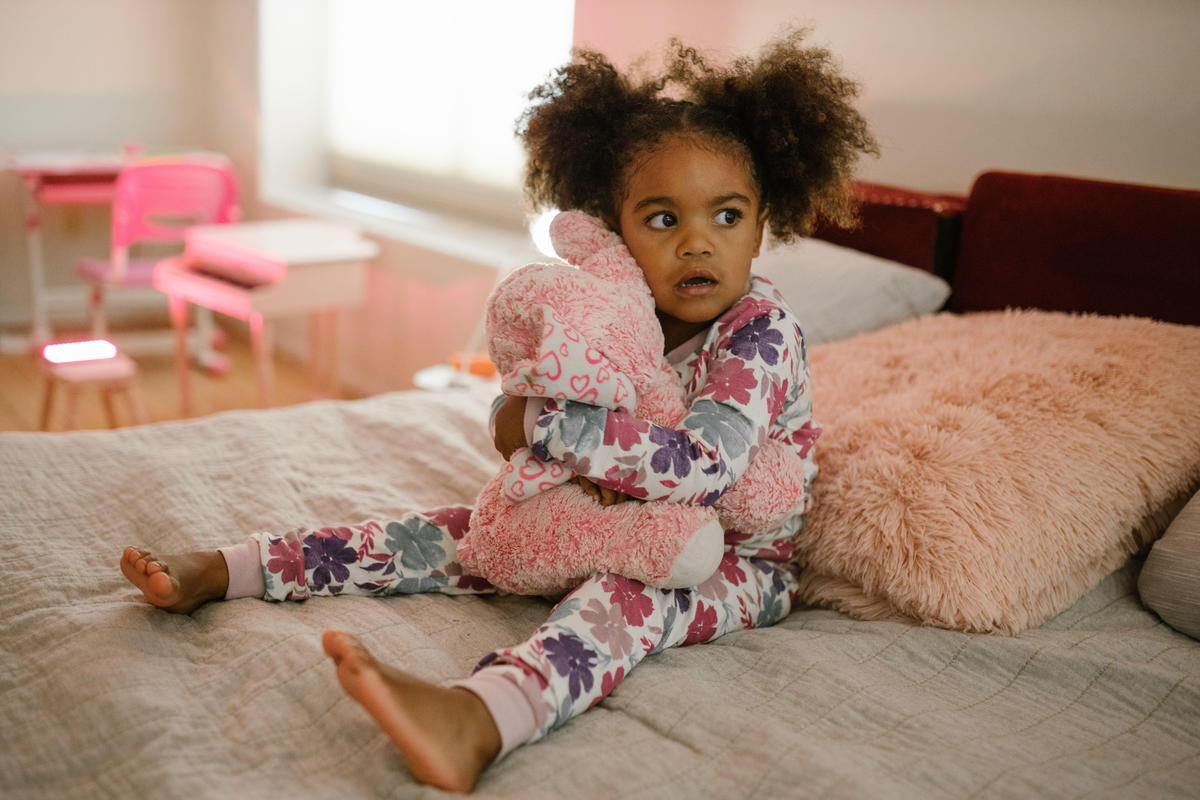
Four filters, and toddler anxiety needs all four rather than any one of them:
- Intensity. The reaction is dramatically bigger than the situation, and the child cannot be settled by the usual comfort that works for everything else.
- Duration. It has been going on for weeks or months rather than days, and it is not tracking a specific event like a new sibling or a move.
- Settings. It happens at home and at daycare and at grandma’s, not only in one place. A child who is fine everywhere except one setting usually has something specific going on in that setting.
- Impairment. It is interfering with sleep, eating, toileting, play, or attendance, or the household has quietly reorganized itself around avoiding the trigger.
That fourth one is the most useful and the easiest to miss, because families adapt gradually. If you have stopped going to the park, stopped having people over, or stopped attempting daycare drop-off, the accommodation itself is the signal.
Worth knowing before you go looking for worried words: toddlers rarely report anxiety. It surfaces as behavior. Meltdowns, freezing, clinging, refusing, hitting, going silent around people outside the family, waking repeatedly, or complaining of stomachaches and headaches with no medical cause. A toddler who says “my tummy hurts” every morning before daycare is often telling you something accurate about how their body feels.
What else could it be?
Several things produce a picture that looks like toddler anxiety, which is why this starts as a medical conversation rather than a mental health one:
- Not enough sleep, or disrupted sleep from any cause
- Hearing or vision problems, which make the world unpredictable
- Speech or language delay, where frustration reads as distress
- Autism spectrum differences or sensory sensitivities
- Pain, reflux, constipation, or another physical problem a toddler cannot describe
- Recent change or stress at home, including a move, a new baby, illness in the family, or conflict a child is picking up on
We check these first. A hearing screen and a good sleep history resolve a surprising number of referrals for “anxiety.”
What can I do at home right now?
Four things that help while you are waiting for an appointment:
- Keep routines predictable, especially around separations and bedtime. Predictability does more for toddler anxiety than reassurance does.
- Name the feeling out loud and simply. “You feel scared of the dog. I am here.” You are not agreeing that the dog is dangerous, you are showing that the feeling is manageable.
- Avoid two extremes: forcing your child into the thing, and removing the thing entirely. Small steps toward it, with you present, is the middle path.
- Do not promise you will not leave, if you are going to leave. Say when you will be back, then be back.
One more, and it is not a throwaway: how you are doing matters. Toddlers read adult stress accurately and respond to it. If your own anxiety has climbed, that is worth raising too, and it does not make you the cause of your child’s.
When should I bring this up with a pediatrician?
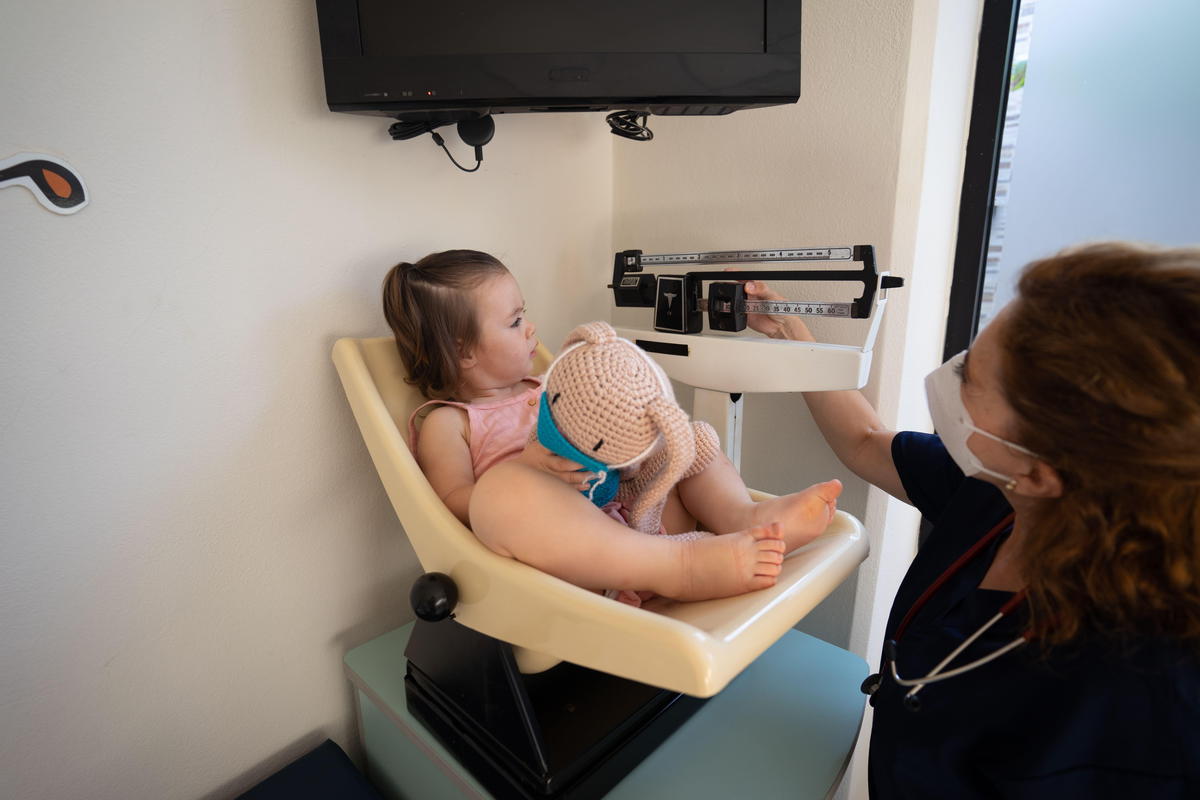
Book a visit if any of these are true:
- The pattern has lasted more than a month without improving
- Your child is losing skills they previously had, like sleeping alone or using the toilet
- Eating, sleeping, or weight gain has been affected
- Daycare or preschool attendance is at risk
- Your child freezes or goes mute around people outside the immediate family
- Your family’s daily life has reorganized around avoiding something
- You are exhausted and it is affecting how you are able to parent
Bring specifics rather than impressions. What happens, how often, how long it lasts, what helps, and what has changed at home. A short two-week log tells us more than a long description does. If your child is due a well-child visit anyway, that appointment can cover this.
What if my toddler needs specialist care?

Most young children never need to leave primary care for this. Predictable routines, a hearing check, a sleep fix, and a few months of development resolve the majority of what we see.
When a referral does make sense, the usual reasons are a pattern that has not shifted with support at home, significant impairment, or a picture that includes possible autism, selective mutism, or a co-occurring concern. Treatment for toddler anxiety is behavioral and parent-led rather than medication-first, and it works best when it involves the caregivers rather than the child alone.
Our sister practice, Harmonyville, provides child and adolescent psychiatry and pediatric anxiety treatment in Mansfield and McKinney. If a referral is the right step, we will tell you what to ask for and help you get there rather than handing you a phone number.
Frequently asked questions
Can a two-year-old really be diagnosed with an anxiety disorder?
Yes, though it is less common than in older children and the bar is deliberately high, because so much fear at this age is developmentally expected. What a clinician looks for is impairment that persists across settings, not the presence of fear itself (CDC, Children’s Mental Health).
Will my toddler grow out of it?
Many children do, particularly when the fear is age-typical, and the family responds with steady routines rather than avoidance. Some do not, and toddler anxiety is one of the better predictors of anxiety later in childhood. That is an argument for asking sooner, not for worrying harder.
Did I cause this?
No. Toddler anxiety reflects temperament, genetics, development, and circumstance in combination, and no single parenting choice produces it. What parents do influence is how a child learns to handle fear, which is a much more hopeful thing to have control over.
This article is general educational information based on AAP and CDC guidance and is not a substitute for an individualized evaluation of your child. Behavior that worries you is always a reasonable reason to call, whether or not it turns out to be anxiety.
Talk to us about your toddler
If any of this sounds like your child, bring it to a visit. We will rule out the medical causes first and tell you honestly whether this looks like something to watch or something to act on. Book at kidsvillepeds.com/appointment, or call the office nearest you:
- Mansfield: (682) 341-3910
- Southlake: (682) 345-8010
- McKinney: (469) 885-9400
Tags:
parenting tips,
toddler anxiety,
toddler behavior,
child mental health,
pediatric anxiety,
separation anxiety


