
Well-Child Checkup: How to Prepare So Nothing Gets Missed
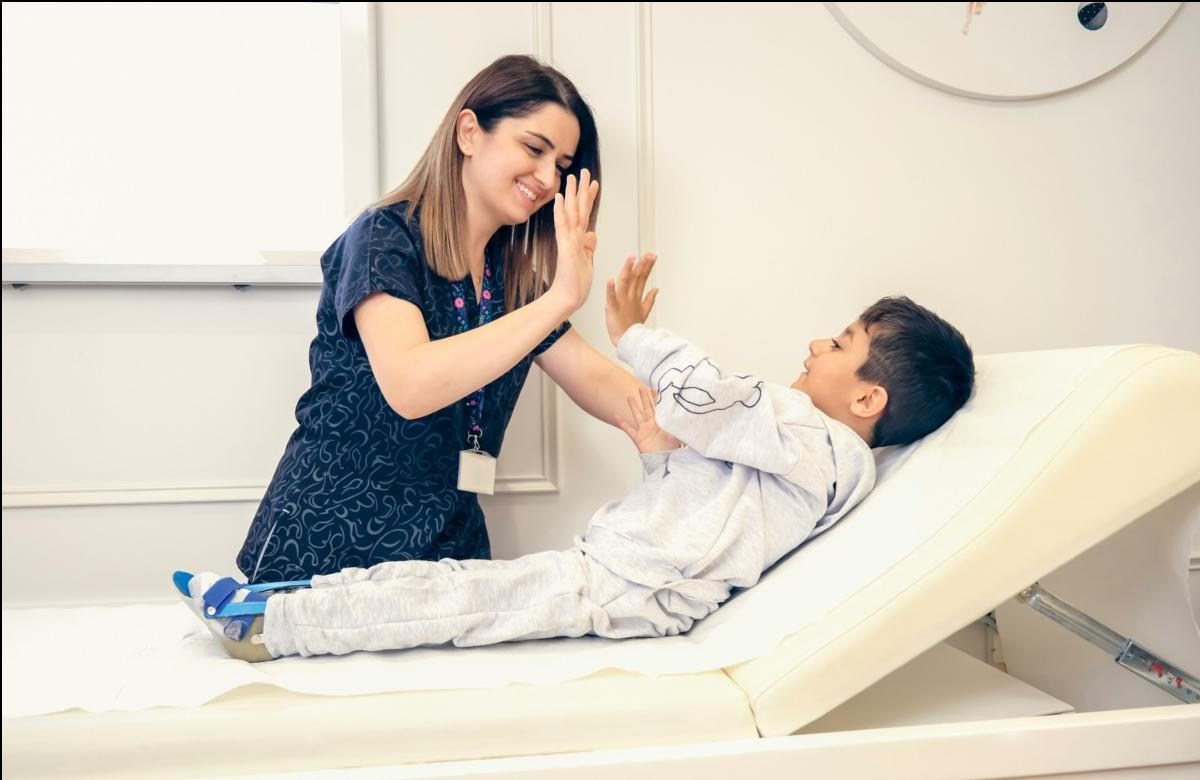
Prepare for a well-child checkup by writing down your top three questions, bringing your insurance card, immunization record, and any specialist or school notes, and jotting down recent sleep, eating, and behavior patterns. Dress your child in easy-to-remove clothing, and for teens, ask for private time with the pediatrician.
You’re in the parking lot and the only question you can remember is the one about the rash — which cleared up two weeks ago. The three that actually mattered are on a sticky note on the refrigerator at home.
A well-child checkup runs 20 to 30 minutes. Ten of those go to measurements, the exam, and screenings, which leaves a narrow window to raise what’s actually on your mind. Fifteen minutes of prep the night before is what turns that window into something useful.
The seven-step prep, in order:
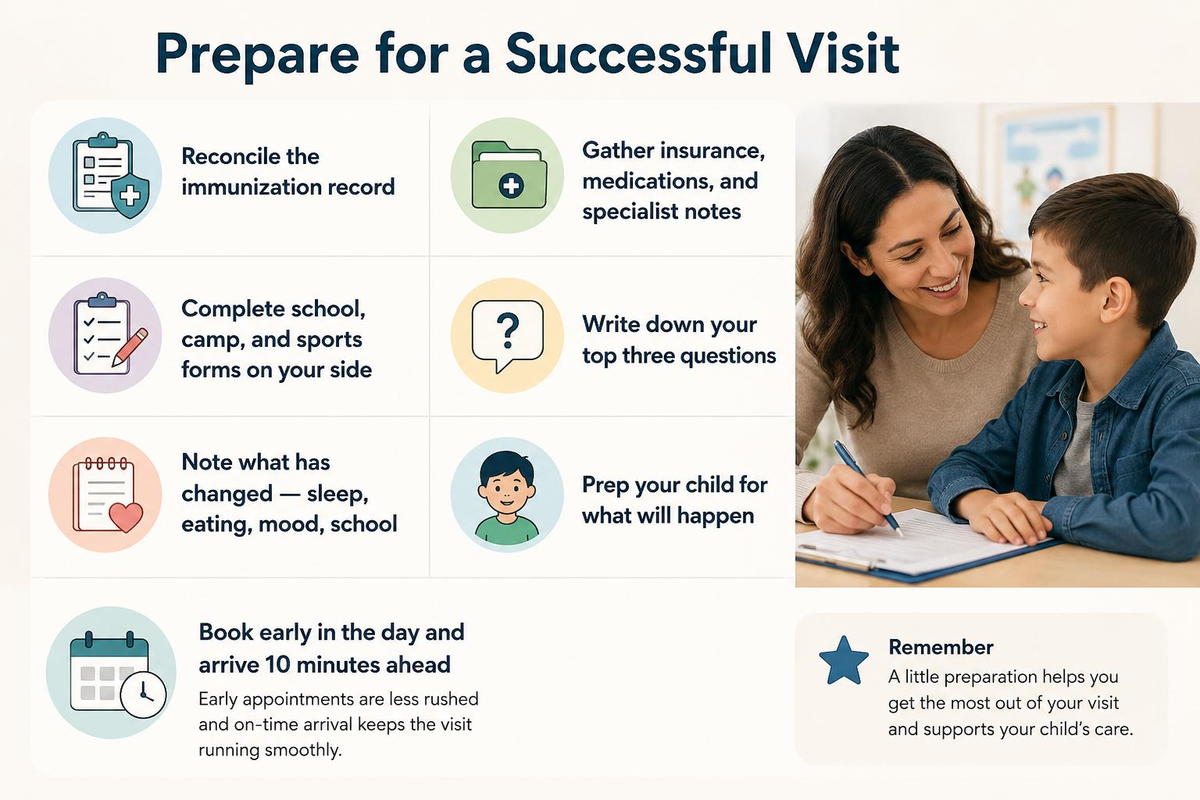
What should I bring to my child’s well-child checkup?
Pack these seven before you leave:
- Insurance card and photo ID — plus the policy number if your child is newly enrolled
- Immunization record, including doses given at a pharmacy, a school clinic, or another practice
- A list of current medications, vitamins, and supplements, with strengths — a photo of the bottles works
- Specialist notes or test results from the past year: allergy, ENT, dental, orthopedics, therapy
- School or daycare forms, filled out on your side, plus sports physical or camp paperwork
- Your written questions — the ones you’ll forget, not the ones you’ll remember
- Age-specific extras — a feeding and diaper log for infants; a snack, a drink, and something quiet to hold for toddlers
One item parents skip and shouldn’t: notes from whoever else cares for your child. If the day is spent with a grandparent, a nanny, or a daycare teacher, ask them the night before whether anything has changed. They often notice speech, coordination, or mood shifts first, because they see your child against a room full of same-age peers.
What questions should I ask the pediatrician?

Pick three. More than that and the important one gets rushed at the door.
Sort your list this way:
- Anything that has changed — sleep, appetite, mood, school performance, toileting, friendships
- Anything you’ve been Googling at night — bring it up directly; a five-minute conversation beats three weeks of worry
- Anything time-sensitive — forms with deadlines, referrals, medication refills, upcoming travel
Let the rest wait for the patient portal or a nurse line call.
Parents frequently ask us whether a concern is “too small” for a well-child checkup. It usually isn’t. A picky eater, a stutter that comes and goes, a six-year-old still having accidents — these are exactly the patterns a pediatrician wants to catch during routine care rather than discover two years later.
If your child is a teenager, expect part of the visit to happen without you in the room. That’s standard practice, not a slight, and it’s how adolescents get honest about sleep, mood, and risk. Tell your teen ahead of time so it doesn’t land as a surprise.
What happens during a well-child checkup?
Roughly this sequence, though the emphasis shifts with age:
Part of the visit |
What it covers |
|---|---|
| Measurements | Weight, length or height, head circumference under age 2, plotted on growth charts; blood pressure from about age 3 |
| Physical exam | Head to toe — eyes, ears, mouth, heart, lungs, abdomen, skin, spine, hips |
| Screenings | Vision and hearing; developmental and autism screening at set ages; anaemia and lead screening in the toddler years; depression screening in adolescence |
| Immunizations | Any doses due, plus catch-up doses |
| Anticipatory guidance | Age-specific safety, nutrition, sleep, screens, discipline, school |
| Your questions | The part you control |
The American Academy of Pediatrics recommends standardized developmental screening at the 9-, 18-, and 30-month visits, with autism-specific screening at 18 and 24 months (AAP / HealthyChildren.org — Your Child’s Checkups). Those are the appointments parents are most tempted to skip, because a healthy toddler doesn’t seem to need a doctor. They’re the ones worth protecting on the calendar.
How do I prepare my child, not just myself?
Match the prep to the age:
- Infants and toddlers: schedule the well-child checkup around naps if you can, and bring the comfort object. Don’t promise “no shots” — if a dose is due, that promise breaks in front of you
- Preschool and early elementary: describe the visit in plain, concrete terms the day before. “The doctor will listen to your heart and look in your ears.” Skip the reassurance loop; over-explaining reads as a warning
- School age: let them answer the pediatrician’s questions themselves. It builds the habit they’ll need at 18
- Teens: tell them they’ll get time alone with the clinician, and that most of what they say stays between them and the doctor, with narrow safety exceptions
For needle anxiety at any age, ask about comfort options when you book — positioning, numbing cream, or a distraction tool. It’s a normal request, not a difficult one.
What about vaccines and paperwork before the visit?
Two things to handle in advance.
Reconcile the immunization record. If your child has ever received a dose outside our office — a flu shot at a pharmacy, a school-based clinic, a previous practice in another state — bring the documentation. Records scatter when families move; schedules rarely do. Our team reconciles what you bring against Texas ImmTrac and builds a catch-up plan from there if there’s a gap. You can review what’s given when on our Immunizations page, and the current national schedule is published by the CDC.
Fill out forms on your side first. School, daycare, camp, and sports forms all have a parent section. Completing it before the well-child checkup means the clinician signs and you leave with it, instead of waiting on a callback.
One scheduling note. If your child wakes up sick the morning of a well-child checkup, call us — don’t just cancel. Depending on what’s going on, we may keep the appointment, convert it to a sick visit, or move it out a week. Mild congestion usually doesn’t stop a well visit from going ahead.
Frequently asked questions

How long does a well-child checkup take?
Plan on 20 to 30 minutes with the clinician, plus check-in. Appointments that include several vaccines, a developmental screening questionnaire, or school forms run toward the longer end. Arriving 10 minutes early for paperwork is the difference between a full visit and a rushed one.
Can my child get vaccines at the same visit?
Yes — that’s the design. Routine doses are timed to well visits, and giving several at once is standard and safe. If your child is behind, the appointment is also where the catch-up plan gets built.
Do we still need a well-child checkup if my child was just seen for an illness?
Yes. A sick visit addresses one problem. A well-child checkup covers growth tracking, screenings, immunizations, and development — none of which happen while a clinician is treating an ear infection. The two aren’t interchangeable, and most plans cover a preventive visit separately once per year.
How often does my child need a well-child checkup?
Frequently in infancy, then annually. Visits cluster in the first two years because growth, development, and immunizations all move fastest then, and space out to once a year from about age 3 through adolescence.
This article is general educational information based on AAP guidance and is not a substitute for individualized medical advice about your child. If your child has an urgent symptom, call our office or seek emergency care.
Book your child’s well-child checkup
Bring the list, bring the record, and we’ll handle the rest. Schedule your child’s well-child checkup online at kidsvillepeds.com/appointment, or call the office nearest you:
- Mansfield — (682) 341-3910
- Southlake — (682) 345-8010
- McKinney — (469) 885-9400
Tags:
preventive care,
well-child checkup,
pediatrician visit,
child health,
immunizations,
parenting tips


