
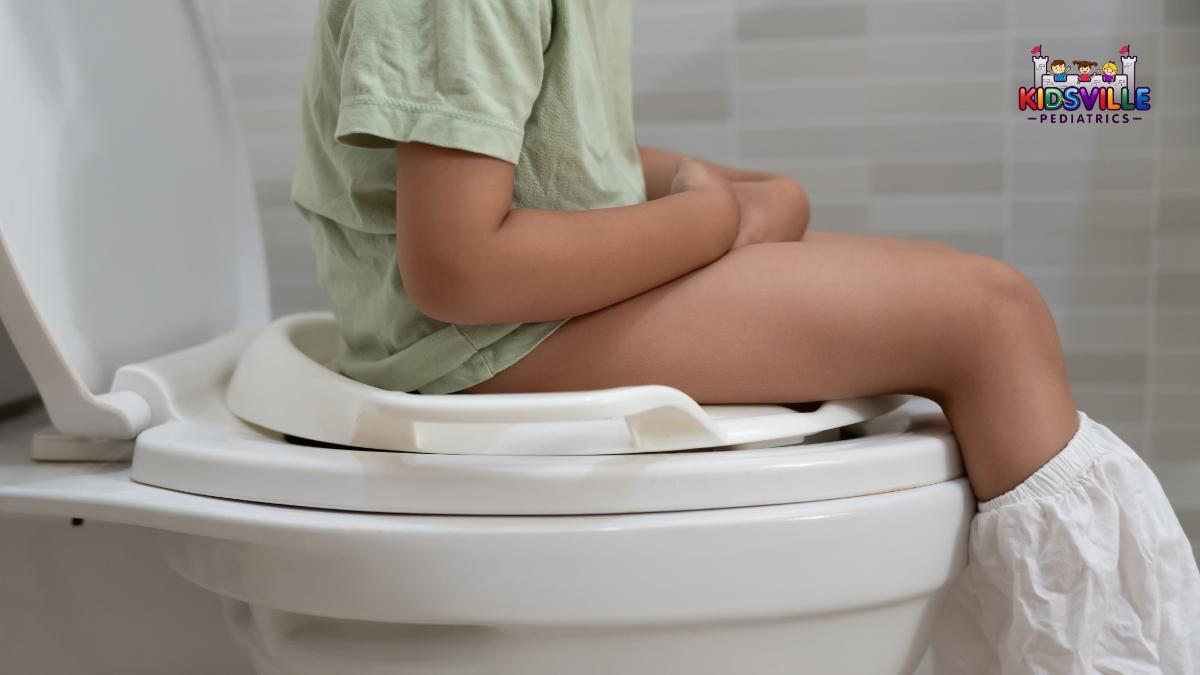
Introduction
Constipation is one of the most common pediatric health concerns and accounts for many office visits each year. While occasional constipation is normal, persistent symptoms can affect a child’s comfort, appetite, mood, and quality of life.
Many parents do not realize that constipation often develops gradually and may present differently in children than in adults.
What Is Constipation?
Constipation generally refers to:
- Infrequent bowel movements
- Hard stools
- Painful bowel movements
- Difficulty passing stool
The frequency of normal bowel movements varies considerably between children.
Common Causes
Low Fiber Intake
Many children consume:
- Processed snacks
- Refined grains
- Limited fruits and vegetables
This can slow digestive function.
Inadequate Hydration
Insufficient fluid intake often contributes to harder stools.
Toilet Avoidance
Children may delay using the bathroom due to:
- Busy schedules
- School concerns
- Fear of pain
Signs and Symptoms
Common symptoms include:
- Stomach pain
- Bloating
- Hard stools
- Straining
- Stool accidents
- Reduced appetite
Why Constipation Can Become a Cycle
Painful bowel movements can cause children to avoid going to the bathroom.
The longer stool remains in the colon:
- More water is absorbed
- Stool becomes harder
- Passing becomes more painful
This creates a cycle that can worsen over time.
Prevention Strategies
Increase Fiber Intake
Good sources include:
- Apples
- Pears
- Berries
- Beans
- Whole grains
- Vegetables
Encourage Hydration
Water supports normal digestive function and stool consistency.
Establish Routine Bathroom Habits
Encourage sitting on the toilet:
- After meals
- At consistent times daily
Physical Activity Matters
Movement stimulates intestinal activity.
Examples include:
- Walking
- Running
- Playground play
- Sports participation
When Constipation Requires Medical Evaluation
Parents should seek pediatric care if:
- Symptoms persist for weeks
- Blood appears in stool
- Weight loss occurs
- Severe abdominal pain develops
- Bowel accidents become frequent
Long-Term Outlook
Most childhood constipation improves with:
- Diet changes
- Hydration
- Consistent routines
- Medical guidance when needed
Conclusion
Constipation is common but manageable. Early intervention often prevents discomfort and helps establish healthy lifelong bowel habits.


