
Color Psychology in Kids: How Colors Shape Emotions, Learning, and Behavior
Parents often focus on what their children eat, how much they sleep, or the activities they enjoy—but one subtle influence is often overlooked: color psychology. The colors surrounding your child can have a surprising impact on their emotions, focus, and even development. At Kidsville Pediatrics, we help parents understand how something as simple as color choices in a child’s environment can nurture a calmer, happier, and more balanced little one.
How Colors Influence Children’s Emotions and Behavior
Children respond to colors more intensely than adults do. Certain hues can affect how they feel, think, and act, even when they aren’t aware of it. For instance, blue is known to calm the mind and reduce anxiety, while red can increase energy and excitement. Yellow is cheerful and energizing, sparking creativity and optimism. Green is associated with balance and relaxation, making it ideal for study or quiet areas.
Warm colors such as orange and red may stimulate play and social interaction, but too much of these shades can lead to overstimulation or restlessness. Cooler tones like blue and green help with concentration and emotional stability. Understanding how your child reacts to each color can guide you in designing spaces that encourage both learning and emotional comfort. This awareness is a foundational part of color psychology, especially in childhood settings.
Best Colors for Learning Spaces and Playrooms
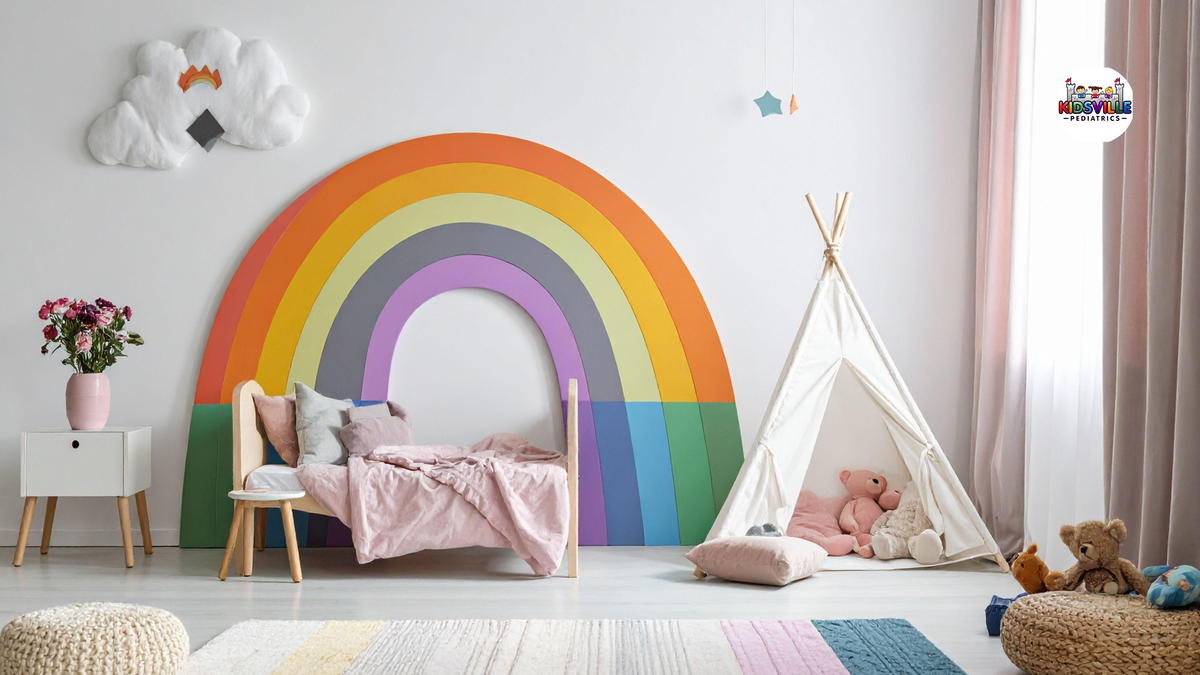
The right color palette can make a huge difference in how children learn and play. A bright, primary-colored playroom may seem fun, but subtle tones often work better for sustained attention and calm behavior. For learning spaces—like homework areas or classrooms—opt for greens, soft blues, or gentle yellows to enhance focus and memory retention.
In playrooms, splashes of orange or coral can promote energy and socialization, while a neutral background prevents overstimulation. Natural light also amplifies the positive effects of these hues. At Kidsville Pediatrics Mansfield, we often remind parents that balance matters: vibrant colors inspire creativity, but muted tones help kids unwind.
Colors That Promote Sleep and Relaxation in Kids

Bedrooms are where color truly influences rest and emotional regulation. Soft shades such as pale blue, lavender, sage green, or warm beige create a soothing environment that encourages better sleep quality. These colors lower heart rate and reduce stress hormones, signaling the body that it’s time to wind down.
Avoid bright red or neon tones in sleeping areas, as they can keep a child alert instead of relaxed. Night lights with soft amber or dim pink tones can be comforting without disrupting melatonin production. Parents who consult a pediatrician in Mansfield for sleep concerns often find that simple changes to lighting and color choices can make a significant difference.
How Kids’ Color Preferences Reflect Their Personality

Color preferences can reveal how children express their personality and emotions. A child drawn to red might be outgoing and energetic, while one who loves blue may lean toward calmness and thoughtfulness. Those who prefer green often seek balance and harmony, while kids who choose purple may have creative or imaginative traits.
Observing your child’s favorite colors can give you insights into their mood and emotional needs. However, these associations aren’t strict rules—children change as they grow, and their color choices may shift too. A pediatrician Mansfield expert might suggest that parents view color preferences as a fun way to better understand emotional development, not as fixed personality tests.
The Role of Color in Early Cognitive and Emotional Development
Research shows that color exposure plays a role in cognitive growth during early childhood. Babies start perceiving primary colors within the first few months, and these hues stimulate neural activity. As children grow, varied color exposure helps them categorize, recognize, and describe emotions more effectively.
When used intentionally, color psychology can boost learning outcomes and improve mood regulation. For example, classrooms painted in gentle greens and blues tend to reduce anxiety, allowing children to perform better on tasks requiring focus. Similarly, colorful educational toys encourage exploration and problem-solving—vital components of early brain development.
This is why many Mansfield pediatricians encourage parents and educators to use color strategically, especially during the early learning years.
Using Color to Support Children with Anxiety, ADHD, or Autism
Color can serve as a gentle form of therapy for children with specific behavioral or sensory needs. For children with anxiety, muted pastels and cool tones can create a sense of safety and calm. Kids with ADHD may benefit from structured spaces with minimal visual clutter and color accents—such as blue for focus or green for balance.
Children on the autism spectrum often experience heightened sensory sensitivity, making it crucial to avoid overly bright or contrasting hues. Soft neutrals combined with predictable color patterns can promote comfort and consistency. Consulting a doctor in Mansfield or a behavioral health specialist can help you tailor your child’s surroundings to their sensory preferences.
This application of color psychology in clinical and home settings highlights how subtle design decisions can promote emotional regulation and self-soothing behaviors.
Fun Activities to Teach Kids About Colors and Feelings

Teaching kids to associate colors with emotions can help them build emotional intelligence. Try creating a “feelings chart” using colored paper—blue for calm, yellow for happy, red for frustrated, and green for relaxed. Encourage your child to place their photo or a small sticker next to the color that matches their current mood.
You can also check out pediatrics in Mansfield TX programs that incorporate art therapy or creative play to support emotional learning. Activities like painting, sorting colored objects, or mixing food coloring into sensory materials help children express their feelings through color. These simple yet meaningful exercises build empathy, emotional awareness, and communication skills in a fun, engaging way.
Pedia Near Me: Kidsville Pediatrics Mansfield
Understanding color psychology gives parents a powerful tool to shape their children’s emotional well-being and learning environment. From choosing bedroom shades that promote sleep to designing classrooms that encourage focus, every hue has a purpose. The goal isn’t to follow strict color rules, but to observe how your child responds and adapt accordingly.
At Kidsville Pediatrics Mansfield, we believe every aspect of a child’s environment—from light to color—plays a role in their growth. By embracing the principles of color psychology, parents can create spaces that nurture calmness, creativity, and confidence at every stage of development.


