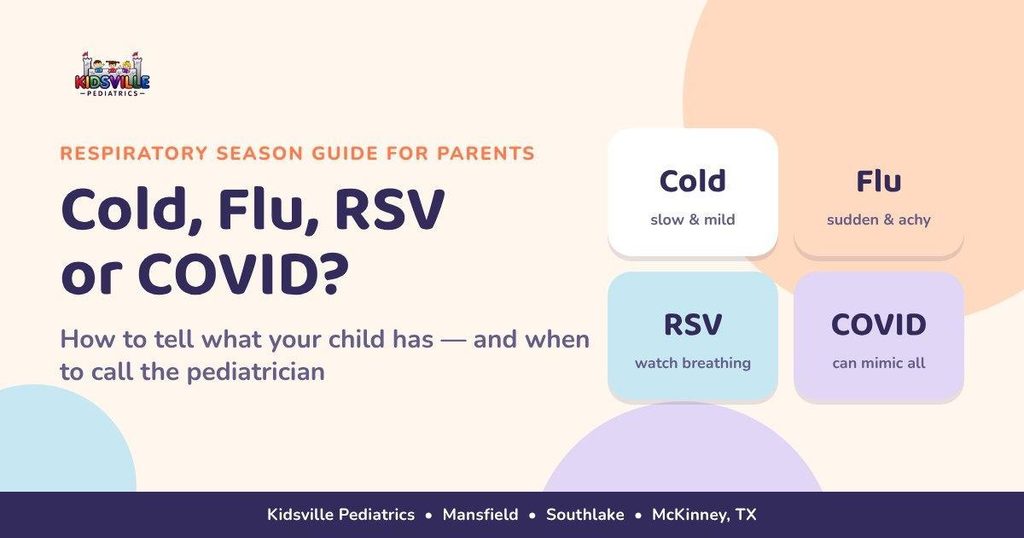
A cold usually starts slowly with a runny nose and little or no fever. The flu hits suddenly with high fever, body aches, and exhaustion. RSV looks like a cold but can cause wheezing and fast breathing in babies. COVID-19 can mimic all three. Because symptoms overlap, a quick test from your pediatrician is the only reliable way to know.
It’s 2 a.m. Your four-year-old is warm to the touch, and the cough that sounded harmless at dinner now sounds worse. Is this another daycare cold, or the start of the flu? Parents in Mansfield, Southlake, and McKinney ask our pediatricians some version of that question every day from October through March.
Here’s how to read the signs, what’s circulating in Texas right now, and exactly when to call.
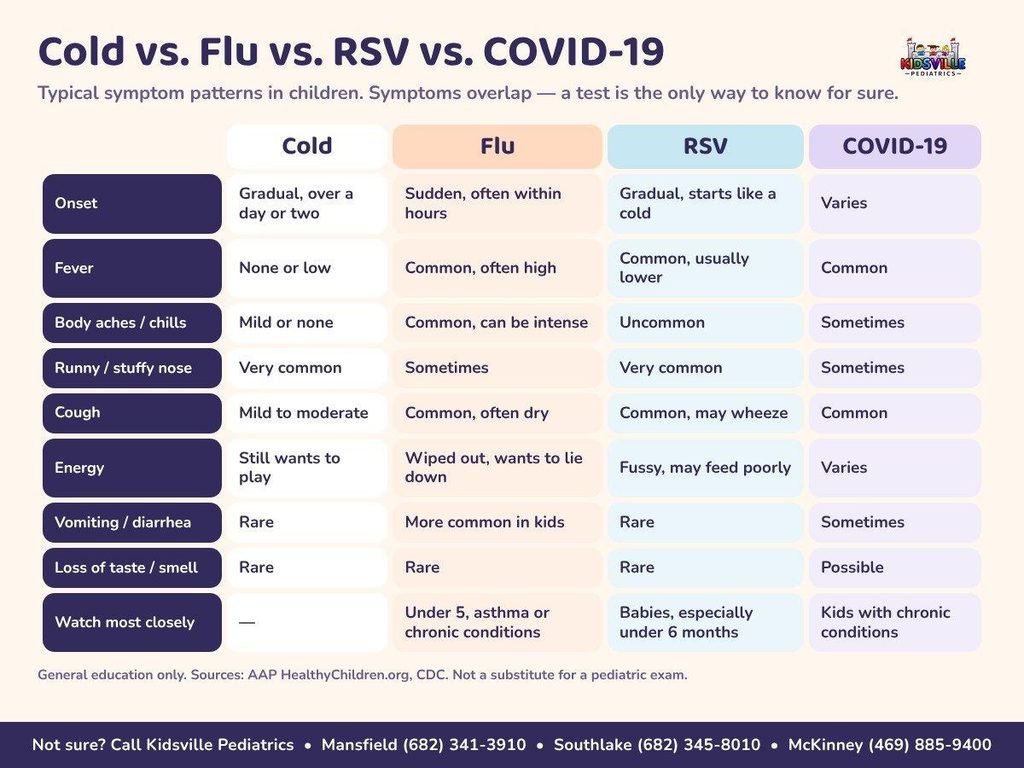
Cold vs. Flu vs. RSV vs. COVID-19: A Symptom Chart for Kids
The fastest way to tell them apart is to look at three things: how fast symptoms started, how high the fever is, and how much energy your child has.
| Symptom | Cold | Flu | RSV | COVID-19 |
|---|---|---|---|---|
| Onset | Gradual | Sudden, often within hours | Gradual, starts like a cold | Varies |
| Fever | None or low | Common, often high | Common, usually lower | Common |
| Body aches / chills | Mild or none | Common, can be intense | Uncommon | Sometimes |
| Runny or stuffy nose | Very common | Sometimes | Very common | Sometimes |
| Cough | Mild to moderate | Common, often dry | Common, may wheeze | Common |
| Energy | Still wants to play | Wiped out | Fussy, may feed poorly | Varies |
| Vomiting / diarrhea | Rare | More common in kids than adults | Rare | Sometimes |
| Loss of taste or smell | Rare | Rare | Rare | Possible |
Typical patterns only, based on guidance from Nemours KidsHealth and the American Academy of Pediatrics’ HealthyChildren.org. Every child is different.
How Do I Know if My Child Has the Flu or a Cold?
Look for these flu clues:
- It came on fast. Fine at breakfast, feverish and achy by lunch.
- The fever is high and comes with chills, headache, or sore muscles.
- Your child is wiped out. Not just tired, but too sick to care about a favorite show.
- Someone close by has the flu. Symptoms usually appear 1 to 4 days after exposure.
In our experience at Kidsville, energy is the most telling clue. A child with a cold often perks up between sniffles and still wants to play. A child with the flu usually wants to lie on the couch and stay there.
Why it matters to know early: the AAP recommends flu antiviral treatment for children at high risk of complications, and says it can be considered for other children when started within 48 hours of the first symptoms (AAP 2026–27 flu recommendations). Waiting a few days to “see how it goes” can close that window. If you suspect flu, book a same-day sick visit at Kidsville Pediatrics so your pediatrician can examine, test if needed, and decide on treatment while it can still help.
When Is RSV Dangerous for Babies and Toddlers?
RSV becomes concerning when it moves from the nose into the small airways of the lungs. Watch your child’s breathing, not just the thermometer:
- Breathing faster than usual, or working hard to breathe
- Skin pulling in between or below the ribs with each breath (retractions)
- Wheezing, grunting, or nostrils flaring
- Pauses in breathing
- Poor feeding or fewer wet diapers
In very young infants, the CDC notes the only signs may be irritability, decreased activity, and trouble breathing (CDC: RSV symptoms and care). Babies under 6 months, premature infants, and children with heart or lung conditions are at highest risk. For a deeper look, read our guide to RSV warning signs in infants, and ask our team about RSV protection options for newborns this season.
What Illnesses Are Going Around in Texas Right Now?
According to the Texas Department of State Health Services report for the week of September 27 to October 3, 2026 (Texas DSHS Respiratory Virus Surveillance, Week 39):
- Cold viruses lead the pack. 35.6% of samples tested for rhinovirus/enterovirus came back positive, the highest of any virus tracked.
- Flu is starting to climb. Positivity rose from 3.65% to 4.47% in one week, almost entirely influenza A (H1N1), and four regions reported increasing activity.
- RSV is still low at about 1.5% positivity, but it typically rises through late fall and winter.
Translation: right now, most sniffles are colds. That will shift over the next several weeks, which is why the next section matters.
When Should I Call the Pediatrician vs. Go to the ER?
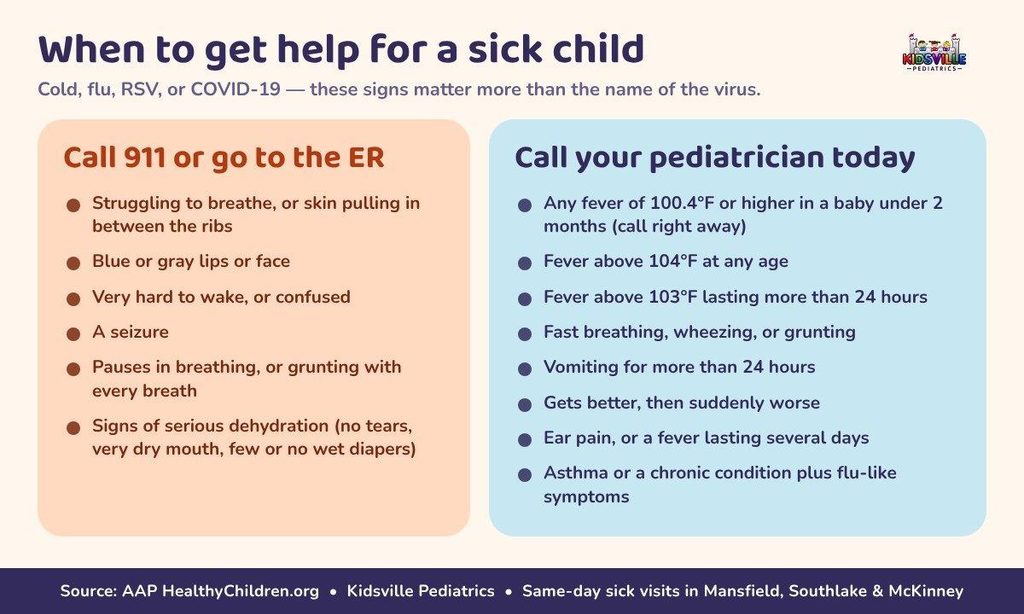
Whatever the virus, these signs matter more than its name (AAP HealthyChildren.org).
Call 911 or go to the ER if your child:
- Is struggling to breathe, or the skin pulls in between the ribs
- Has blue or gray lips or face
- Is very hard to wake, or seems confused
- Has a seizure
- Shows signs of serious dehydration: no tears, a very dry mouth, few or no wet diapers
Call your pediatrician the same day if your child has:
- Any fever of 100.4°F or higher and is under 2 months old (call right away, day or night)
- A fever above 104°F at any age, or above 103°F for more than 24 hours
- Fast breathing, wheezing, or grunting
- Vomiting for more than 24 hours
- Symptoms that improve, then suddenly get worse
- Ear pain, or a fever that lasts several days
- Asthma, diabetes, or another chronic condition plus flu-like symptoms
For fever medicine, always use a weight-based chart from your pediatrician. Never guess a dose, and never give aspirin to children.
How Can I Protect My Child This Flu Season?
- Get the flu vaccine now. The AAP recommends it for every child 6 months and older, ideally completed by the end of October. During the 2025–26 season, about 190 U.S. children died from flu, and historically about 85% of children who die from flu were unvaccinated. Book a flu shot through our pediatric immunization services.
- Protect your newest baby. Ask about RSV protection options during pregnancy or after birth.
- Wash hands often and teach kids to cough into their elbow.
- Keep sick kids home until they’re fever-free for 24 hours without fever-reducing medicine and are feeling better.
Frequently Asked Questions
Can my child have the flu and RSV at the same time?
Yes. Children can be infected with two respiratory viruses at once, and co-infections can make them sicker. That’s one reason our pediatricians test rather than guess when a child seems more ill than expected.
How long is a child contagious with the flu?
People with flu are most contagious in the first 3 to 4 days after symptoms start, and young children can spread it for longer. Keep your child home until the fever has been gone for 24 hours without medicine.
Do antibiotics help with a cold, flu, or RSV?
No. Colds, flu, RSV, and COVID-19 are caused by viruses, and antibiotics only treat bacteria. Your pediatrician may prescribe antibiotics if a bacterial problem develops, such as an ear infection or pneumonia.
Should I take my child to urgent care or the pediatrician for flu symptoms?
For most flu symptoms, start with your pediatrician. We know your child’s history, offer same-day sick appointments, and can test when needed and treat within the 48-hour antiviral window. Save the ER for the emergency signs listed above.
This article is general educational information and is not a substitute for an individual evaluation by a licensed pediatric clinician. If your child is having trouble breathing, is hard to wake, or you believe it is an emergency, call 911 or go to the nearest emergency room.
Sick Child? Get a Same-Day Visit at Kidsville Pediatrics
Not sure if it’s a cold, the flu, or RSV? Don’t wait it out. We make every effort to see sick children the same day you call, with Saturday hours at our Mansfield, Southlake, and McKinney offices. Call as early in the day as you can.
Request an appointment online →
- Mansfield: (682) 341-3910
- Southlake: (682) 345-8010
- McKinney: (469) 885-9400
After hours? Call your clinic and follow the prompts to reach our free after-hours nurse line.